Address
304 North Cardinal
St. Dorchester Center, MA 02124
Work Hours
Monday to Friday: 7AM - 7PM
Weekend: 10AM - 5PM
Address
304 North Cardinal
St. Dorchester Center, MA 02124
Work Hours
Monday to Friday: 7AM - 7PM
Weekend: 10AM - 5PM
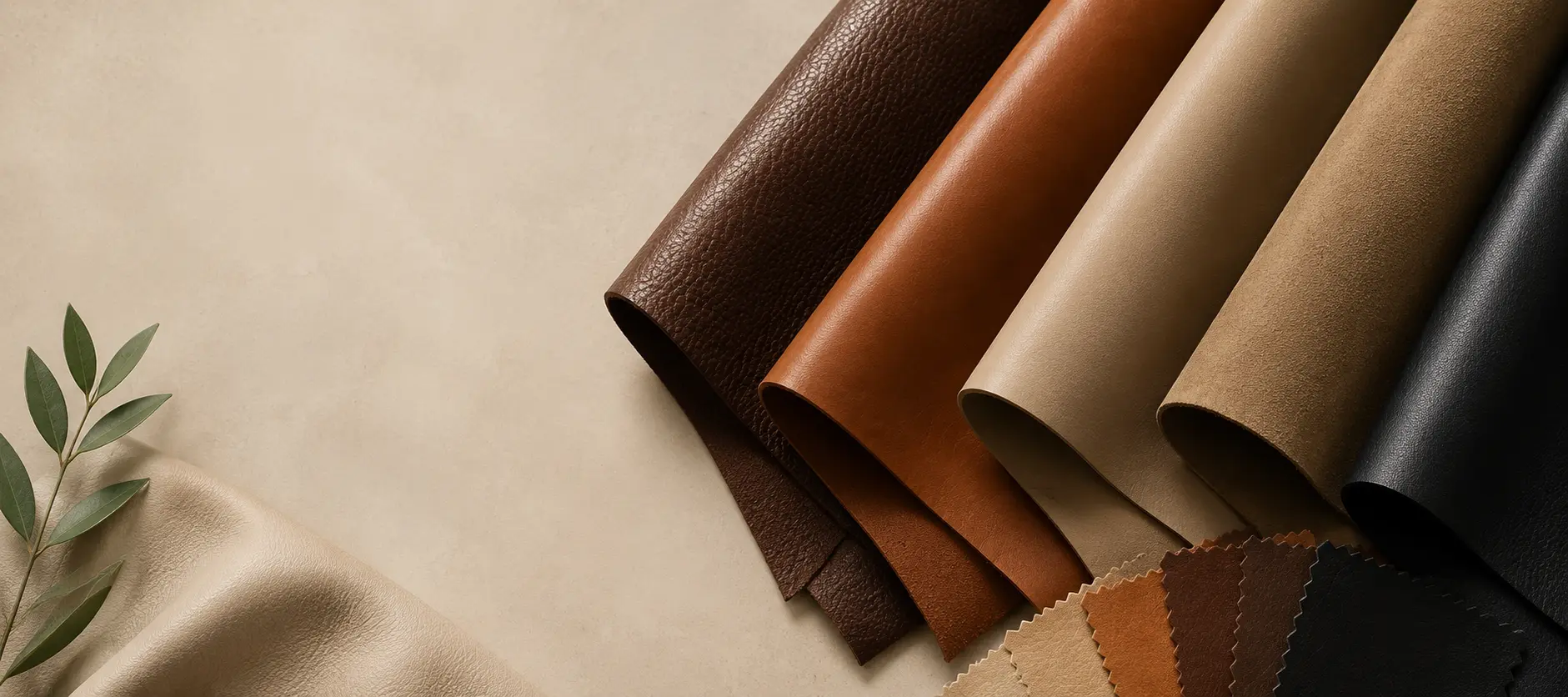
If you’re sourcing leather products for your brand — jackets, bags, gloves, belts, or any other category — you’ll run into a wall of terminology almost immediately: full-grain, top-grain, genuine, bonded, chrome-tanned, vegetable-tanned, LWG-certified. Suppliers throw these terms around assuming you already know what they mean. Many buyers don’t, and suppliers rarely volunteer to close that gap, because the confusion often works in their favor. This guide exists to close it. No filler, no generic “leather is luxurious” copy — just what leather actually is, how it’s graded, what determines its price, and what you need to ask before you commit to an order.

Leather is animal hide (most commonly cattle, but also sheep, goat, and other animals) that has been chemically treated to stop it from decomposing and to make it flexible, durable, and workable. That treatment process is called tanning. Untreated hide would rot within days; tanned leather can last decades.
Every hide has layers, and this matters more than most buyers realize. Picture a cross-section of cowhide: the outermost surface is the densest, tightest layer of fiber — this is where the hide’s natural grain, pores, and markings sit. As you move deeper into the hide, the fiber structure loosens and weakens. Where a hide is cut within this structure determines everything about the leather’s strength, appearance, and price. This single fact is the foundation of every leather grade you’ll encounter.
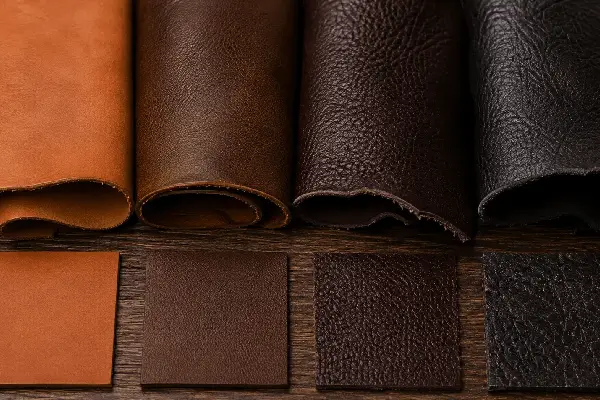
Manufacturers and marketers use these four terms constantly, and only two of them reliably mean “high quality.” Here’s what each one actually refers to, and why the distinction matters for your production.
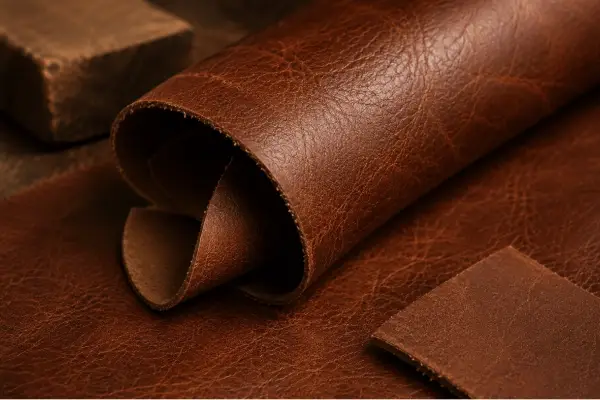
Full-grain comes from the very top layer of the hide, left largely as-is. It is not sanded, buffed, or corrected to remove natural markings — the pores, subtle scars, and grain variation you see are the real surface of the animal’s skin. Because the fiber structure here is at its densest, full-grain leather is the strongest and most durable grade available. It also breathes, ages visibly over years of use (developing what’s called a patina), and shows very slight natural variation between hides — which is expected, not a defect.
This is the grade to specify for any product where longevity and premium positioning matter: jackets meant to last years, structured bags, and goods you intend to sell at a higher price point.
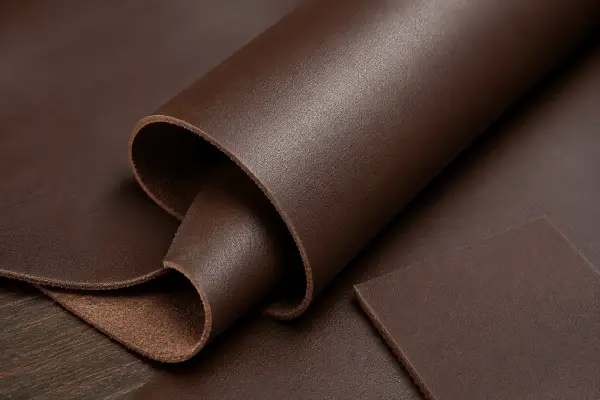
Top-grain also comes from the upper layer of the hide, but it goes through an additional step: light sanding or buffing to remove natural imperfections, followed by an embossed or refinished surface for a more uniform appearance. This makes top-grain thinner, more consistent from piece to piece, and slightly easier to dye and shape than full-grain — but it sacrifices some of the natural fiber density in the process, making it a step down in durability.
Top-grain is a legitimate, genuinely high-quality material — it is not a red flag on its own. It’s the right choice when you need visual consistency across a production run (every unit looking identical) more than you need maximum longevity.
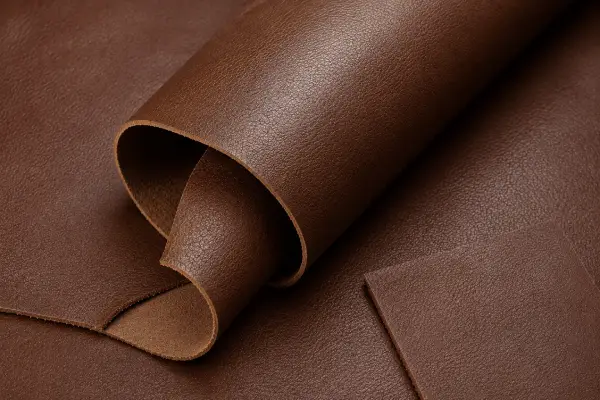
This is where most buyers get misled, because the name works against you. “Genuine leather” sounds like it should mean “real, high-quality leather.” In the industry, it actually refers to a specific — and low — grade: material cut from the lower split layers of the hide, after the full-grain and top-grain layers have already been removed. This split layer has none of the original hide’s natural grain, so it’s heavily processed, sanded, and coated with an artificial texture to resemble higher-grade leather.
It is technically real leather (as opposed to synthetic), but it is the weakest grade that still qualifies for that label. It lacks the fiber density of full-grain or top-grain, doesn’t age the same way, and tends to show cracking or surface degradation within a few years of regular use rather than developing a patina. It has a legitimate place in lower-cost product lines — but if a supplier quotes “genuine leather” at a price close to full-grain, that’s worth questioning directly.
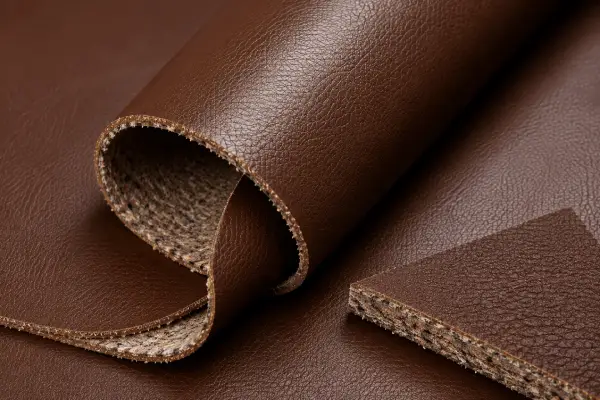
Bonded leather isn’t cut from a hide layer at all. It’s manufactured from leftover leather scraps and dust — the waste byproduct of processing higher grades — shredded, mixed with polyurethane or latex binders, and pressed onto a fabric or fiber backing. The surface is then embossed to visually resemble natural grain.
This is the lowest grade on the market and the shortest-lived. Because its structure depends on the binding agent rather than natural hide fiber, it tends to crack and peel as that binder degrades — often within a year or two of regular use, sometimes faster. It has legitimate uses in low-cost, short-lifespan applications, but it should never be positioned or priced as a premium material.
The buyer’s bottom line: grade alone tells you which layer of the hide was used and how much it was altered afterward. Always get the specific grade — not just the word “leather” — confirmed in writing before approving any sample.
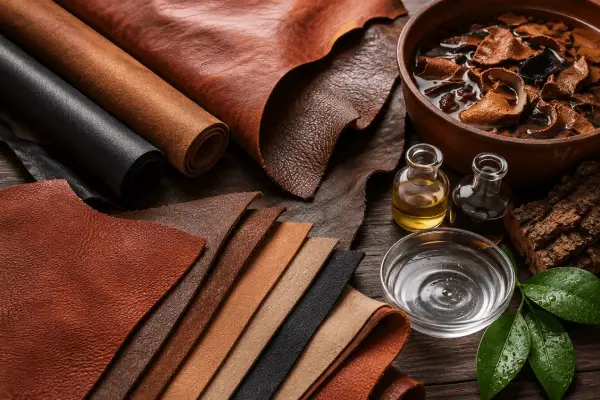
Grade tells you which part of the hide you’re getting. Two other factors — the animal source and the tanning method — shape how that leather performs, feels, and prices out. A full-grain hide from one source and process is not automatically identical to a full-grain hide from another.
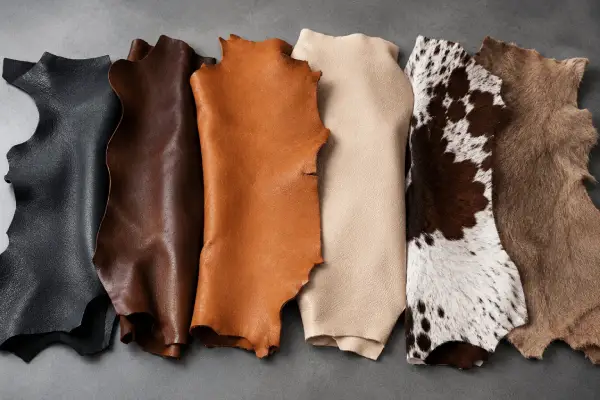
Buffalo Leather — thick and rugged, often used as a more cost-effective alternative to cowhide for goods needing similar durability
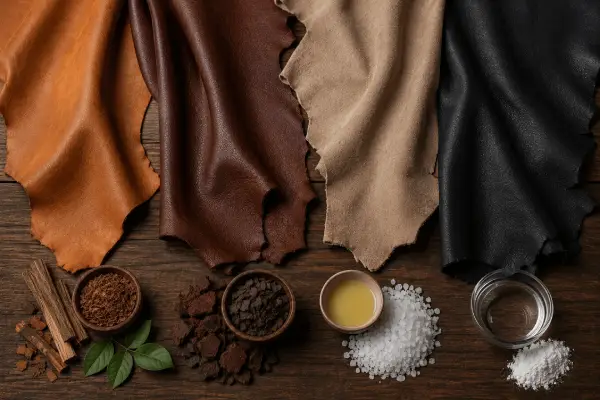
1.Chrome tanning uses chromium salts and takes days rather than weeks, producing soft, consistent, relatively low-cost leather. It’s the dominant method used across commercial manufacturing worldwide because of its speed and cost-efficiency, and the majority of leather goods on the market today — including most mid-to-premium products — are chrome-tanned.
2. Vegetable tanning uses natural tannins from bark, leaves, and plant material instead of chemical agents. It’s a slower process, sometimes taking weeks or months, and produces leather with a distinct natural character and a tanning process generally regarded as more environmentally gentle. It typically costs more and is chosen for heritage-positioned or premium product lines rather than high-volume production.
3. Combination tanning blends both methods to balance cost, flexibility, and aging characteristics — a middle path some tanneries use to get closer to vegetable-tan character at closer to chrome-tan cost and speed.
Neither method is objectively “better” in every context — the right choice depends on your product’s price point, positioning, and how you want it to age. What matters as a buyer is knowing which one you’re getting and why your manufacturer chose it.
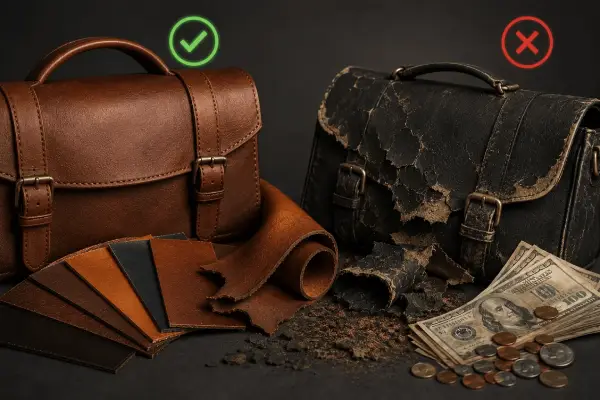
A grade mismatch doesn’t just affect your margin on one order — it affects your return rate and your brand’s reputation with the customer who bought from you. Genuine and bonded leather goods that crack or peel within a year generate refund requests, negative reviews, and — for a private label brand — direct damage to a name you’re trying to build trust in. A full-grain or top-grain product costs more upfront, but it’s also the version of your product that doesn’t come back to you six months later with a complaint attached.
This is why grade specification belongs in your product brief from day one, not something you find out after the first customer complaint. If you’re testing a new product line, it’s worth paying the premium for the correct grade on your initial run even at a small batch size, rather than cutting cost on a grade you haven’t validated with real customers yet.
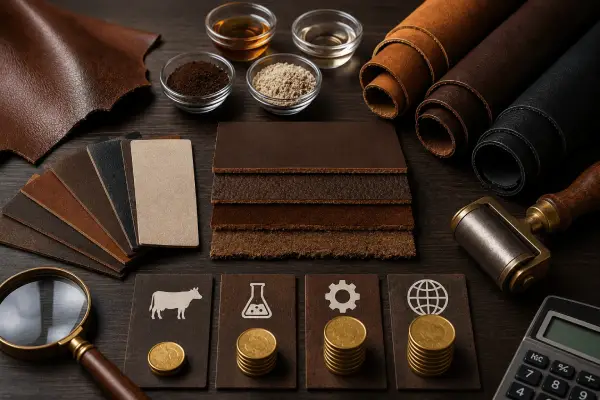
Buyers often assume leather cost is a single number tied to “quality,” but it’s really the sum of several separate decisions:
Two suppliers quoting different prices for “full-grain leather jackets” aren’t necessarily one being dishonest and one being fair — they may be using different hide types, finishes, or tanning methods within that same grade. This is exactly why asking for the full spec (grade, hide type, tanning method, finish) matters more than asking for the grade alone.
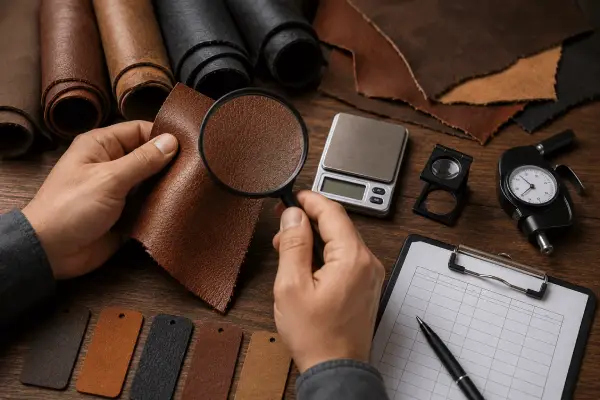
Don’t rely on a supplier’s word alone. A few checks — done on a physical sample, not a photo — tell you a lot:
Check the cut edge. Full-grain and top-grain leather show a tight, consistent fiber structure at a cut edge. Genuine (split) leather often shows a rougher, more fibrous edge. Bonded leather will often reveal a visible mesh or fabric backing at the edge — a clear giveaway.
Look at the grain under light. Full-grain leather shows natural, irregular grain variation — no two areas look identical. Top-grain has a more uniform, slightly artificial-looking texture from the embossing process. Genuine leather’s embossed pattern tends to look flat and mechanically regular.
Do a water-drop test. On full-grain leather, a small water drop will typically be absorbed slightly and darken the surface (unless the hide has been heavily waxed or sealed). On heavily coated genuine or bonded leather, water tends to bead and roll off, because it’s sitting on a plastic coating rather than porous hide.Ask for the grade in writing on the spec sheet, not just verbally on a call. If a supplier’s documentation just says “leather” with no grade specified, treat that as a gap to close before you commit to a bulk order — not something to assume in your favor
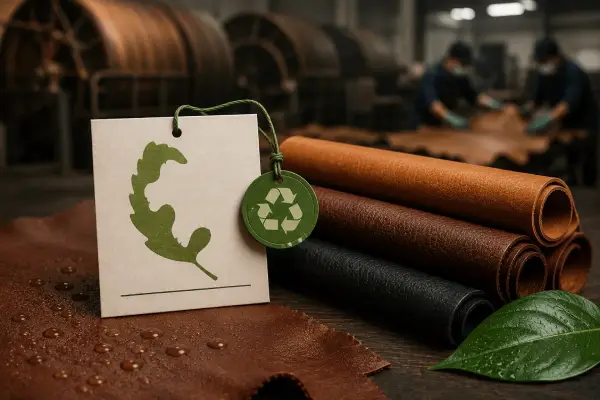
If sustainability and supply chain transparency matter to your brand or your customers, the Leather Working Group (LWG) certification is the standard most likely to come up. LWG audits tanneries — not brands, and not individual products — against an environmental protocol covering energy use, water treatment, chemical management, and traceability. Certified tanneries are rated Bronze, Silver, or Gold depending on audit score.
A couple of things worth knowing before you lean on this in your own marketing: LWG certifies the tannery’s environmental performance specifically. It is not a legal compliance certification, and it does not, by itself, guarantee anything about worker safety standards or the ethics of the wider supply chain beyond the tannery gate. If ethical sourcing claims matter to your brand positioning, LWG certification is a genuinely useful signal — but it’s one input, not a complete guarantee, and it’s worth understanding exactly what it does and doesn’t cover before you build marketing claims on top of it.
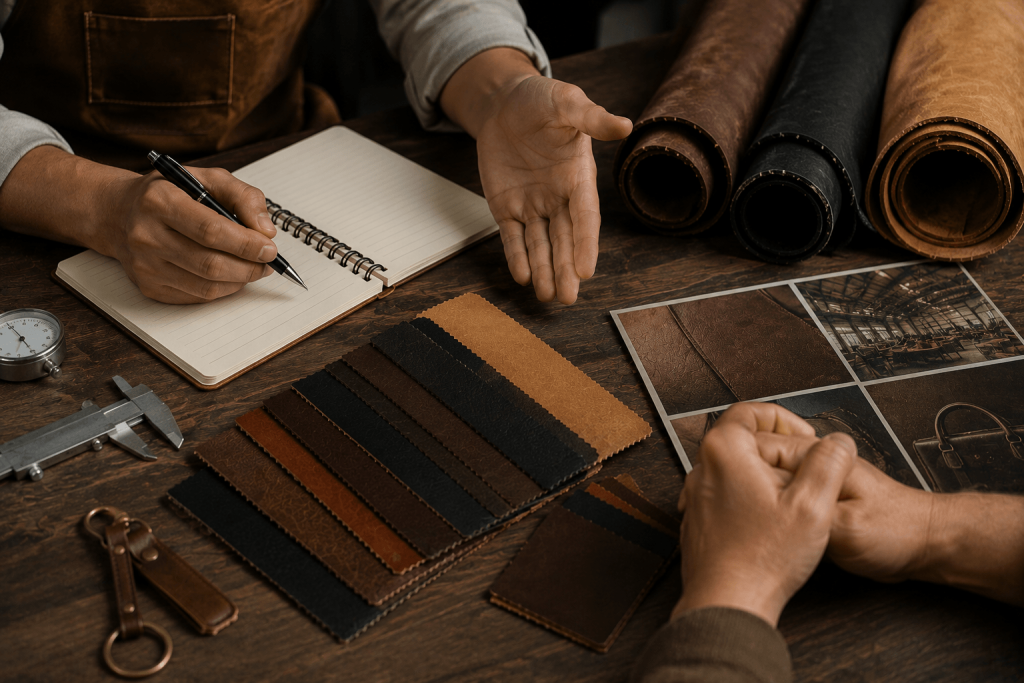
Whether you’re sourcing your first sample or scaling an existing line, these questions should be answered clearly and in writing before you commit:
1. What’s the exact grade — full-grain, top-grain, genuine, or bonded — for this specific product?
2. What hide type is being used, and where is it sourced from?
3. Which tanning method was used, and does it match the durability and aging behavior you want for this product?
4. Can I get a physical swatch or sample before approving a full production run — not just a photo?
5. Is the tannery LWG-certified, if that matters for your brand’s positioning?
6. What’s the minimum order quantity for this specific grade and finish?
7. Do you offer private label or OEM production, and what does that include (branding, tags, packaging)?
A manufacturer who answers these directly, with documentation, is signaling exactly the kind of transparency you want in a long-term production partner. Vague answers to specific questions are information too — and worth treating as a warning sign before you scale an order.
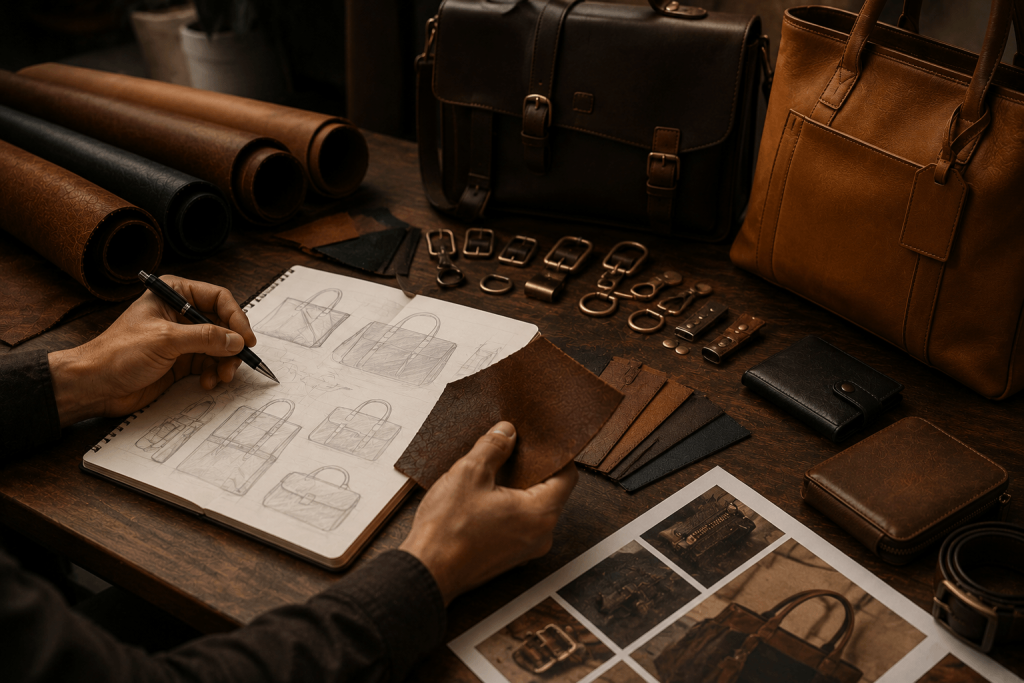
Surafh Industry manufactures private label and OEM leather jackets, gloves, bags, belts, and wallets from Sialkot, Pakistan — full-grain and top-grain only, with grade and hide type confirmed in writing before any sample is approved. [Get in touch to discuss your product.]
Full-grain is the uncut top layer of the hide with the strongest fiber structure and longest lifespan. Genuine leather is cut from a lower split layer after the top layers are removed, then coated to look better than it performs — it’s real leather, but the weakest grade that still uses that name.
Yes. Top-grain is a legitimate high-quality grade — it’s sanded and refinished for a more consistent look, which makes it slightly less durable than full-grain but ideal when you need every unit to look identical.
Bonded leather is made from shredded leather scraps and dust mixed with polyurethane or latex binders, pressed onto a fabric backing, and embossed to resemble natural grain. It’s the lowest grade and typically cracks or peels within a year or two.
Chrome tanning uses chromium salts and takes days, producing soft, consistent, lower-cost leather — it’s the industry standard. Vegetable tanning uses plant tannins, takes weeks to months, costs more, and produces leather with more natural character and aging.
Leather Working Group (LWG) certifies a tannery’s environmental performance — energy use, water treatment, chemical management — rated Bronze, Silver, or Gold. It doesn’t cover worker safety or the full supply chain beyond the tannery itself.
The exact grade, hide type and source, tanning method, whether a physical swatch is available, LWG certification status, MOQ, and whether they offer private label or OEM only.