Address
304 North Cardinal
St. Dorchester Center, MA 02124
Work Hours
Monday to Friday: 7AM - 7PM
Weekend: 10AM - 5PM
Address
304 North Cardinal
St. Dorchester Center, MA 02124
Work Hours
Monday to Friday: 7AM - 7PM
Weekend: 10AM - 5PM
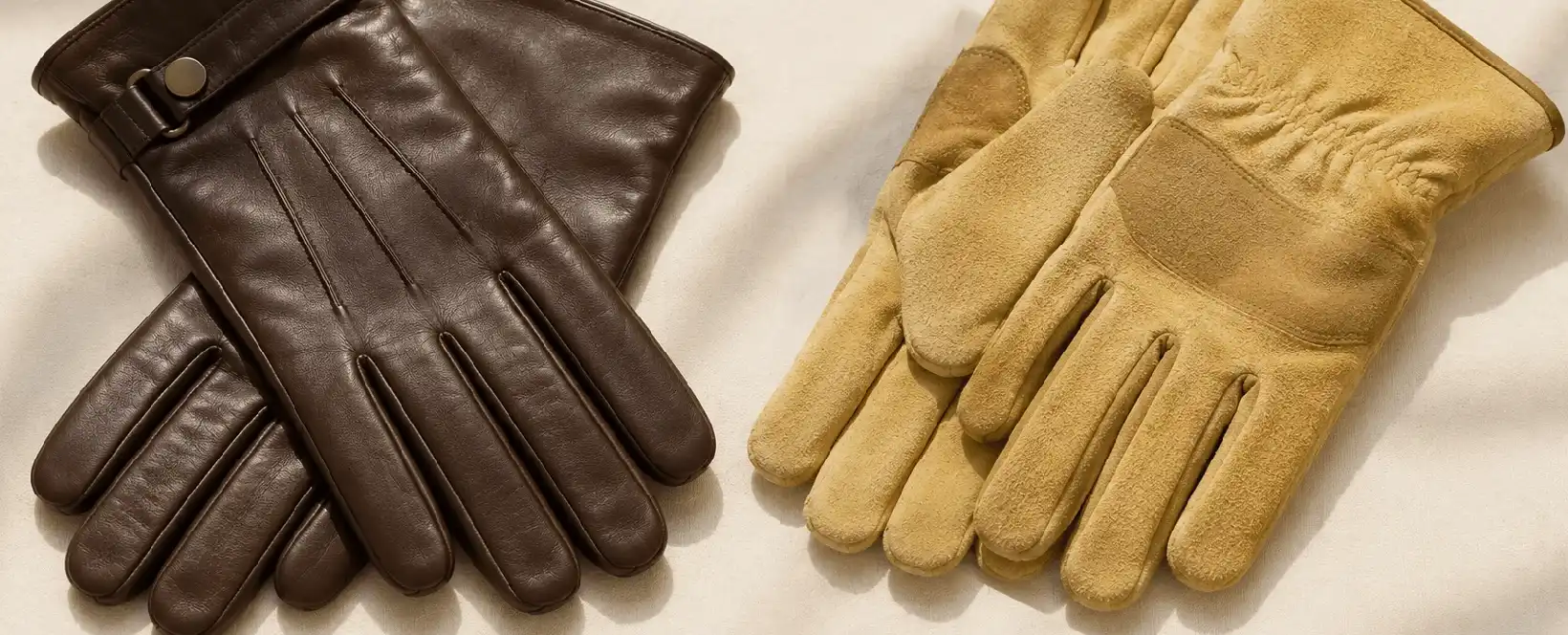
Leather gloves are one of those products that look simple from the outside but get complicated fast once you start sourcing them. The leather grade, the stitching, the lining, the cut, and the finish all change how the glove performs and how long it lasts.
If you’re a wholesaler, distributor, retail brand, or industrial buyer trying to source leather gloves, this guide is built for you. It covers what leather gloves are, the leather types used to make them, the different glove categories on the market, how they’re actually manufactured, and what separates a glove that lasts years from one that falls apart in a season.
Whether you need custom leather gloves for a private label launch, wholesale leather gloves for a distribution network, or industrial leather gloves for a safety equipment line, understanding the fundamentals here will help you make a smarter buying decision.
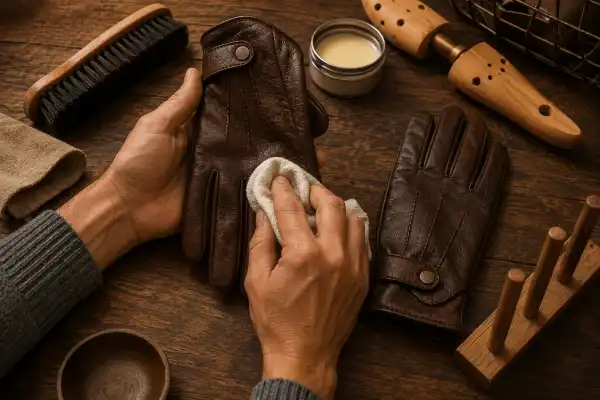
Leather gloves are hand coverings made from tanned animal hide, shaped and stitched to fit the hand while allowing natural movement. The hide goes through a tanning process that converts raw skin into a stable, flexible material, then gets cut into panels and sewn into the final glove shape.
Leather has been used for hand protection and outerwear for centuries, and it’s still the material of choice today for one simple reason: nothing synthetic replicates its combination of strength, flexibility, and breathability quite as well.
Depending on the leather type, the lining, and the construction, leather gloves can serve very different purposes — from thin, dexterous driving gloves to thick, reinforced gloves built for welding or heavy industrial work.

Synthetic materials have improved a lot over the past decade, but leather gloves still hold their position at the top of the market. Here’s why buyers keep coming back to genuine leather gloves instead of switching to synthetic alternatives.
Leather molds to the hand. Unlike synthetic materials, leather gradually shapes itself to the wearer’s hand with use, which improves comfort and grip over time instead of degrading it.
It breathes. Leather has natural pores that allow air to pass through, which keeps hands cooler during long wear compared to sealed synthetic materials.
It ages instead of just wearing out. Genuine leather develops a patina over time — a natural, slightly darker sheen that actually looks better with age rather than worse.
It’s repairable. A synthetic glove that cracks or peels is usually done. A leather glove can often be conditioned, restitched, or repaired, extending its usable life well beyond the first sign of wear.
It performs across categories. The same core material — leather — works for fashion gloves, work gloves, driving gloves, and industrial gloves. Few materials scale across that many use cases without losing performance.
For B2B buyers, this durability and versatility translates directly into fewer returns, stronger customer satisfaction, and a product that holds its value on the shelf.
Not every leather glove is made from the same leather, and the leather type used has a direct impact on cost, durability, and end use. Here’s a breakdown of the most common leather types in glove manufacturing.

Full grain leather is the top layer of the hide, left unsanded and unaltered. It keeps the natural grain pattern intact, which makes it the strongest and most durable leather option. Full grain leather ages well, develops a rich patina, and holds up to years of regular use. It’s the standard choice for premium leather gloves.
Top grain leather is the layer just below the surface, lightly sanded to remove imperfections. It’s slightly more affordable than full grain while still offering strong durability and a clean, uniform look. Many mid-to-premium glove lines use top grain leather as a balance between cost and quality.
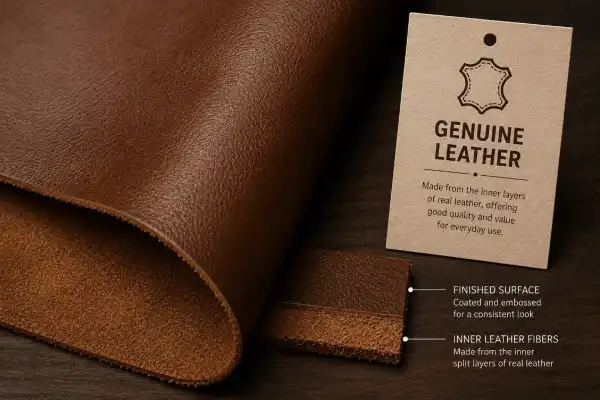
Despite the name, genuine leather is actually a lower grade of real leather, typically made from the split layers left over after the top grain is removed. It’s real leather, but it’s less durable than full grain or top grain. It works well for gloves that don’t need to withstand heavy daily wear.

Goatskin is naturally rich in lanolin, which makes it soft, flexible, and water-resistant straight out of the box. It’s a popular choice for driving gloves and work gloves where dexterity matters as much as durability.

Cowhide is thick, tough, and highly resistant to abrasion, which makes it the go-to leather for work gloves, motorcycle gloves, and industrial gloves. It’s also relatively affordable compared to more delicate leather types.

Deerskin is soft and supple with a distinctive natural grain. It offers a strong balance of comfort and durability, which is why it shows up often in fashion gloves and driving gloves aimed at a premium market.

Sheepskin is naturally warm, soft against the skin, and lightweight, making it the leather of choice for winter gloves and lined gloves where comfort and insulation matter more than raw toughness.
| Leather Type | Durability | Flexibility | Best Use Case |
| Full Grain Leather | Very High | Moderate | Premium gloves, long-term daily use |
| Top Grain Leather | High | Moderate-High | Mid-to-premium gloves, everyday wear |
| Genuine Leather | Moderate | High | Casual gloves, lighter use |
| Goatskin | High | Very High | Driving gloves, work gloves |
| Cowhide | Very High | Moderate | Work gloves, industrial gloves, motorcycle gloves |
| Deerskin | High | High | Fashion gloves, driving gloves |
| Sheepskin | Moderate | High | Winter gloves, lined gloves |
Leather gloves aren’t a single product category — they’re a family of products, each built for a specific job. Here’s how the main categories break down.
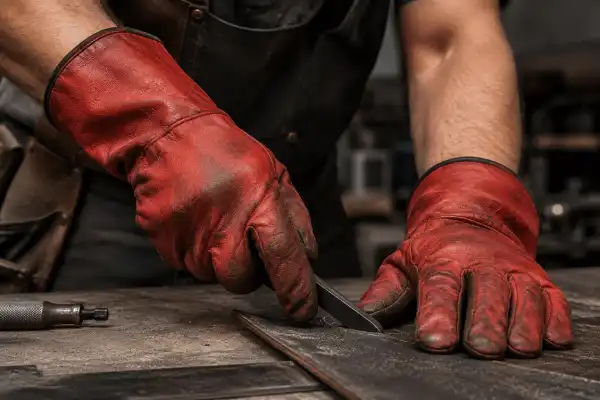
Built for general labor, construction, and warehouse environments. Work leather gloves typically use cowhide or goatskin for a balance of durability and dexterity, often reinforced at the palm and fingers.

Designed for warmth first. Winter leather gloves usually pair a sheepskin or lambskin shell with a wool, fleece, or cashmere lining to trap heat without adding bulk.
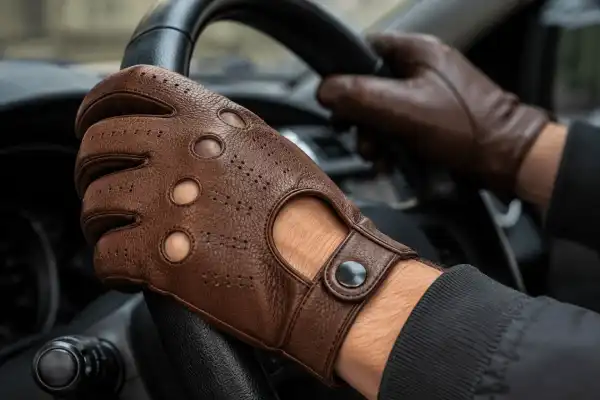
Thin, flexible, and low-profile. Driving gloves use soft leathers like goatskin or deerskin with minimal padding, so the wearer keeps full steering feel and grip.

Built for abrasion resistance and impact protection. Motorcycle gloves rely on thicker cowhide, reinforced palms, and extended cuffs to protect the hand and wrist during a fall or long ride.

Combine leather panels with reinforced knuckle protection and grip-enhancing palms, built for control and durability in demanding physical environments.

Focused on appearance and feel as much as function. Fashion gloves typically use finer leathers like deerskin or lambskin, often with a closer fit and refined stitching.
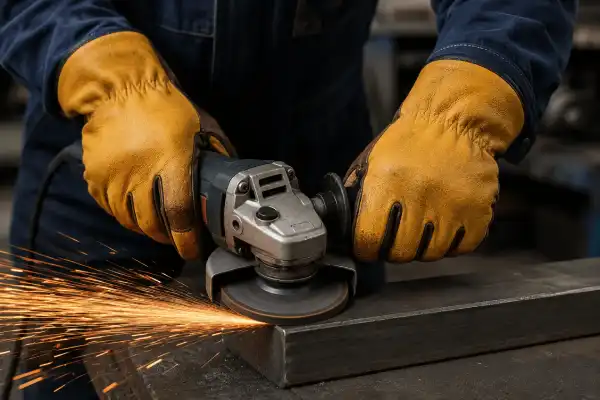
Heavy-duty gloves built for factory and manufacturing environments, where cut resistance, grip, and long wear life matter more than style. Industrial leather gloves often use thick cowhide with reinforced stitching at stress points.
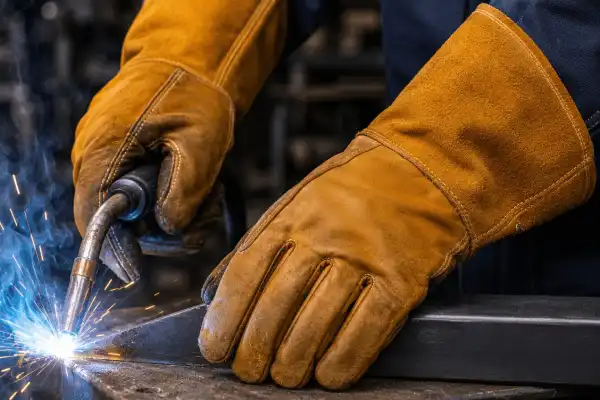
Built to handle heat, sparks, and abrasion. Welding gloves use thick cowhide or goatskin with extended cuffs for forearm protection and heat-resistant stitching to prevent seam failure under high temperatures.
Across every category above, genuine leather gloves share a set of core advantages that keep them in demand for both consumer and industrial markets.

Understanding the manufacturing process helps buyers ask the right questions when sourcing leather gloves, and helps explain why quality varies so much between suppliers.

The process starts with selecting the hide and grade — full grain, top grain, or genuine leather, along with the specific animal source (cowhide, goatskin, deerskin, or sheepskin) based on the glove’s intended use.
Once the leather is selected, it’s cut into the individual panels that make up the glove — the palm, back, fingers, and thumb piece. Precision at this stage affects both fit and how efficiently the leather is used.

The cut panels are sewn together into the glove shape. Stitching quality is one of the biggest factors in how long a glove lasts — double stitching and reinforced seams at high-stress points (like the fingers and palm) hold up far longer than single-stitched construction.
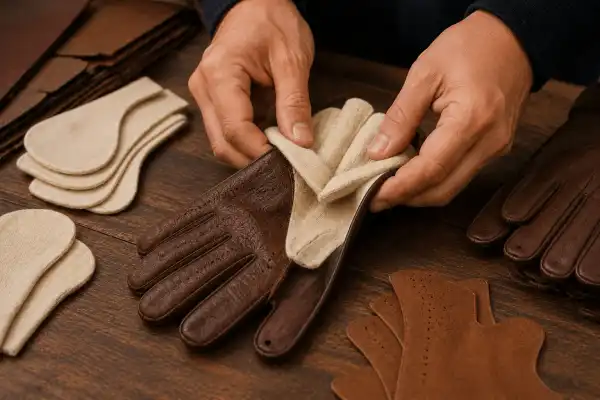
If the glove is lined — with wool, fleece, cashmere, or a thermal material — the lining is inserted and secured at this stage. Lining choice affects warmth, comfort, and how the glove feels against the skin.

Finished gloves are checked for consistent stitching, correct sizing, leather flaws, and overall construction quality before moving to the next stage. This step catches defects before they reach the buyer.

Finishing touches — trimming loose threads, shaping the cuff, applying any surface treatment — are completed to give the glove its final look and feel.
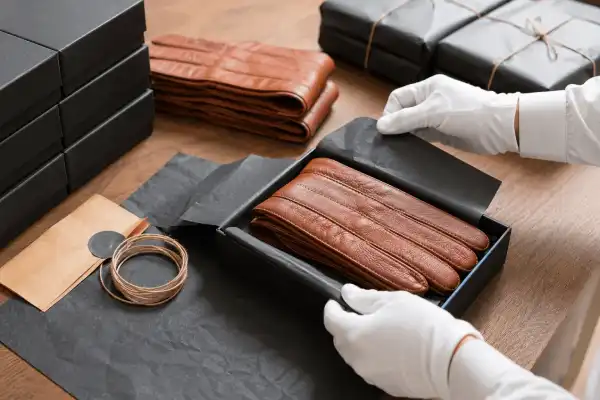
Gloves are paired, sized, and packaged for shipment, whether that’s individual retail packaging or bulk case packing for wholesale and distribution orders.
Each of these steps is an opportunity for quality to slip if a manufacturer cuts corners. That’s why working with a manufacturer who controls the full process — not just a subset of it — matters so much for consistent results at scale.

Whether you’re buying for personal use or sourcing for a business, these are the factors that actually determine whether a glove is a good purchase.
Match the leather to the use case. Cowhide for heavy-duty work, goatskin for driving and dexterity, sheepskin for warmth, deerskin for fashion. The wrong leather for the job leads to gloves that underperform no matter how well they’re made.
Check the stitching. Look closely at the fingers and palm creases — these are the first places seams fail. Double stitching at stress points is a strong sign of quality construction.
Test the fit. A good leather glove should feel snug, not tight, with fingertips reaching the end of the glove without extra space bunching up. Leather relaxes with wear, so a slightly snug fit out of the box is correct.
Look at the grain. Full grain and top grain leather both hold up significantly better than lower grades. Ask your supplier directly which grade they’re using — it should never be a vague answer.
Consider the lining for climate. If the gloves are headed to a colder market, confirm the lining material and thickness match the expected conditions.
Ask about minimum order quantities and customization. For B2B buyers, this matters as much as the product itself. A supplier that offers OEM production, private label options, and flexible bulk quantities makes scaling a lot easier than one that only sells fixed catalog items.
This is one of the most common questions buyers ask, so here’s a direct, side-by-side comparison.
| Factor | Leather Gloves | Synthetic Gloves |
| Durability | High to very high, improves with proper care | Moderate, tends to degrade steadily over time |
| Breathability | Naturally breathable | Often sealed, less airflow |
| Comfort Over Time | Molds to the hand, improves with wear | Stays static, doesn’t adapt to the hand |
| Repairability | Can often be conditioned or restitched | Usually not repairable once damaged |
| Upfront Cost | Higher | Lower |
| Long-Term Cost | Lower cost per year of use | Higher replacement frequency |
| Appearance Over Time | Develops a natural patina | Can crack, peel, or discolor |
For buyers focused purely on upfront unit cost, synthetic gloves can look appealing. But for brands building a reputation on quality — or industrial buyers who need gloves that hold up under daily use — genuine leather consistently wins on total value.

Leather gloves don’t need constant maintenance, but a simple care routine extends their life significantly.
With this kind of care, a well-made leather glove can realistically last five to ten years.
Even experienced buyers make avoidable mistakes when sourcing or purchasing leather gloves. Here are the most common ones.
Assuming “genuine leather” means premium quality. As covered earlier, genuine leather is actually a lower grade than full grain or top grain. Always ask for the specific leather grade rather than relying on the label alone.
Ignoring stitching until it fails. Weak stitching is often invisible until the glove is already in use. Inspecting seams before placing a large order avoids costly returns later.
Choosing the wrong leather for the climate or use case. A thin driving glove leather won’t hold up to industrial abrasion, and a heavy work glove leather will feel stiff and impractical for fashion use.
Overlooking minimum order quantities and lead times. For wholesale and private label buyers, this is often more important than the product specs themselves. Confirming MOQs and production timelines upfront prevents supply chain surprises.
Skipping a sample order. Committing to a bulk order without testing a sample first is one of the most common — and most avoidable — mistakes in B2B sourcing.

Surafh Industry manufactures leather gloves and related leather goods for wholesale buyers, importers, distributors, and private label brands across international markets.
Manufacturing expertise. Surafh Industry works directly with leather sourcing, cutting, and stitching processes, giving buyers visibility and consistency across production runs.
OEM services. Businesses that need gloves built to their own specifications — leather type, lining, stitching style, sizing — can work with Surafh Industry as an OEM partner rather than choosing from a fixed catalog alone.
Private label solutions. Retail brands and distributors looking to launch their own branded leather glove line can source through Surafh Industry’s private label manufacturing services.
Bulk production capability. Surafh Industry is built to handle wholesale and bulk order volumes for distributors and importers who need consistent supply at scale.
Quality control throughout production. Leather grade, stitching, and finishing are checked at each stage of manufacturing, rather than only at the final inspection.
Skilled craftsmanship. Glove construction — cutting, stitching, and finishing — is handled by experienced production teams familiar with the specific demands of leather glove manufacturing.
Export capability. Surafh Industry serves international B2B buyers, including businesses in the USA, Canada, UK, EU, and Australia.
Custom branding options. Buyers can work with Surafh Industry to apply their own branding, packaging, and labeling to finished products.
Reliable delivery. Production and shipping timelines are communicated clearly so buyers can plan inventory and launch schedules with confidence.
Customer-focused approach. Surafh Industry works directly with buyers throughout the sourcing process — from initial inquiry through sampling and final production — to make sure the finished product matches what was agreed on.
If you’re evaluating leather glove manufacturers for an OEM, private label, or wholesale order, Surafh Industry is built to support that process from first sample to final shipment.
What are leather gloves made of?
Leather gloves are made from tanned animal hide — most commonly cowhide, goatskin, deerskin, or sheepskin — cut into panels and stitched into the final glove shape.
Which leather is best for gloves?
It depends on the use case. Cowhide is best for heavy-duty work and industrial gloves, goatskin for driving and dexterity, sheepskin for warmth, and deerskin for fashion and premium driving gloves.
What is the difference between full grain and genuine leather?
Full grain leather is the top, unaltered layer of the hide and is the strongest, most durable option. Genuine leather is a lower grade made from split layers, and while it’s still real leather, it’s less durable than full grain or top grain.
Are leather gloves better than synthetic gloves?
For durability, breathability, and long-term value, genuine leather gloves generally outperform synthetic gloves. Synthetic gloves can be more affordable upfront but tend to wear out faster.
How long do leather gloves last?
With proper care and good construction, quality leather gloves typically last five to ten years.
Can leather gloves get wet?
Most leather gloves are water-resistant but not fully waterproof unless specifically treated. Light rain or snow is fine; prolonged soaking will damage untreated leather over time.
How do I clean leather gloves?
Wipe with a barely damp cloth and mild soap, then let them air dry away from direct heat. Never machine wash or dry with direct heat.
How should leather gloves fit?
Snug through the palm and fingers with no extra bunching at the fingertips, while still allowing a full fist and natural finger movement.
What is the minimum order quantity for custom leather gloves?
Minimum order quantities vary by manufacturer and depend on the leather type, customization level, and production complexity. Contact Surafh Industry directly to discuss MOQs for your specific requirements.
Can I get my own branding on leather gloves?
Yes. Private label and custom branding services allow businesses to apply their own labeling, packaging, and branding to gloves manufactured for their line.
What is OEM leather glove manufacturing?
OEM manufacturing means the gloves are built to a buyer’s specific requirements — leather type, lining, stitching, and sizing — rather than sold as a fixed, pre-designed product.
Do leather gloves work for industrial safety use?
Yes. Industrial leather gloves, typically made from thick cowhide, offer strong resistance to abrasion, cuts, and moderate heat, making them a standard choice in manufacturing and industrial settings.
What lining is best for winter leather gloves?
Wool, fleece, and cashmere linings are common choices for winter gloves, offering warmth without adding significant bulk.
How do I know if leather gloves are genuine?
Genuine leather has a natural, slightly uneven grain and a distinct leather smell. It also softens and creases with wear, while synthetic materials stay uniform and don’t develop character over time.
How do I start a wholesale or private label leather glove order?
Reach out to Surafh Industry directly with your requirements — leather type, glove style, quantity, and any custom branding needs — to begin the sampling and production process.
Leather gloves remain one of the most durable, versatile, and reliable products on the market, whether they’re built for fashion, work, winter, or industrial use. The difference between a glove that lasts a decade and one that falls apart in a season comes down to leather grade, construction quality, and manufacturing consistency.
For importers, wholesalers, distributors, and private label brands looking to source leather gloves that meet real quality standards, working with an experienced manufacturer makes all the difference. Surafh Industry offers OEM manufacturing, private label solutions, and wholesale production for businesses that need genuine leather gloves built to specification and delivered reliably.
If you’re ready to source custom, wholesale, or private label leather gloves, contact Surafh Industry today to discuss your requirements and start the sampling process.